
Computer output
As early as the 1980s, Océ developed a digital printer for printing data files generated by large (mainframe) computers such as those from IBM. The output of such computers consisted of alphanumeric characters (letters and numbers) containing information about their relationships. Initially (in the 1960s), this output was mainly printed using automatic typewriters and dot matrix printers on continuous forms.
Electrophotographic copying machines, with their higher speed, 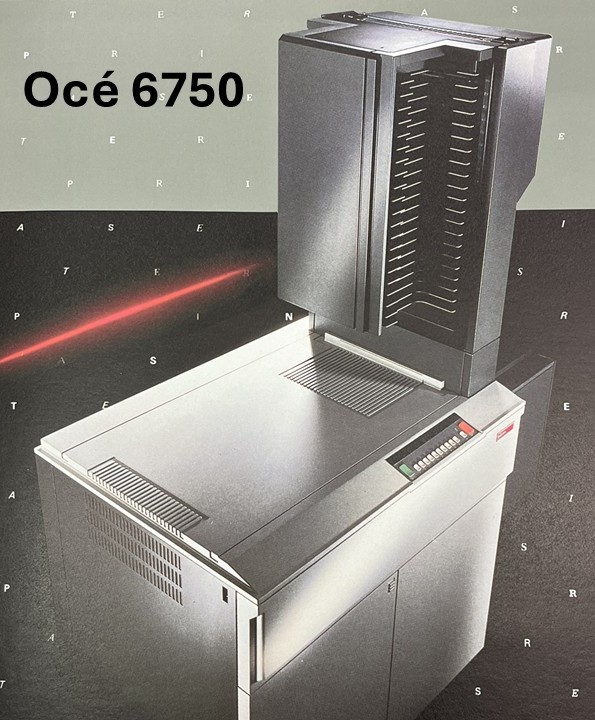 offered an attractive alternative. For this purpose, they had to be modified to generate alphanumeric images themselves and project them onto the photoconductor. The software for image formation was executed by a computer, the so-called controller. Such a controller could do little more than form letters and place them in the correct positions. Océ developed the Océ 6750 computer output printer for this purpose, a further development of the Océ 1900 copying machine.
.
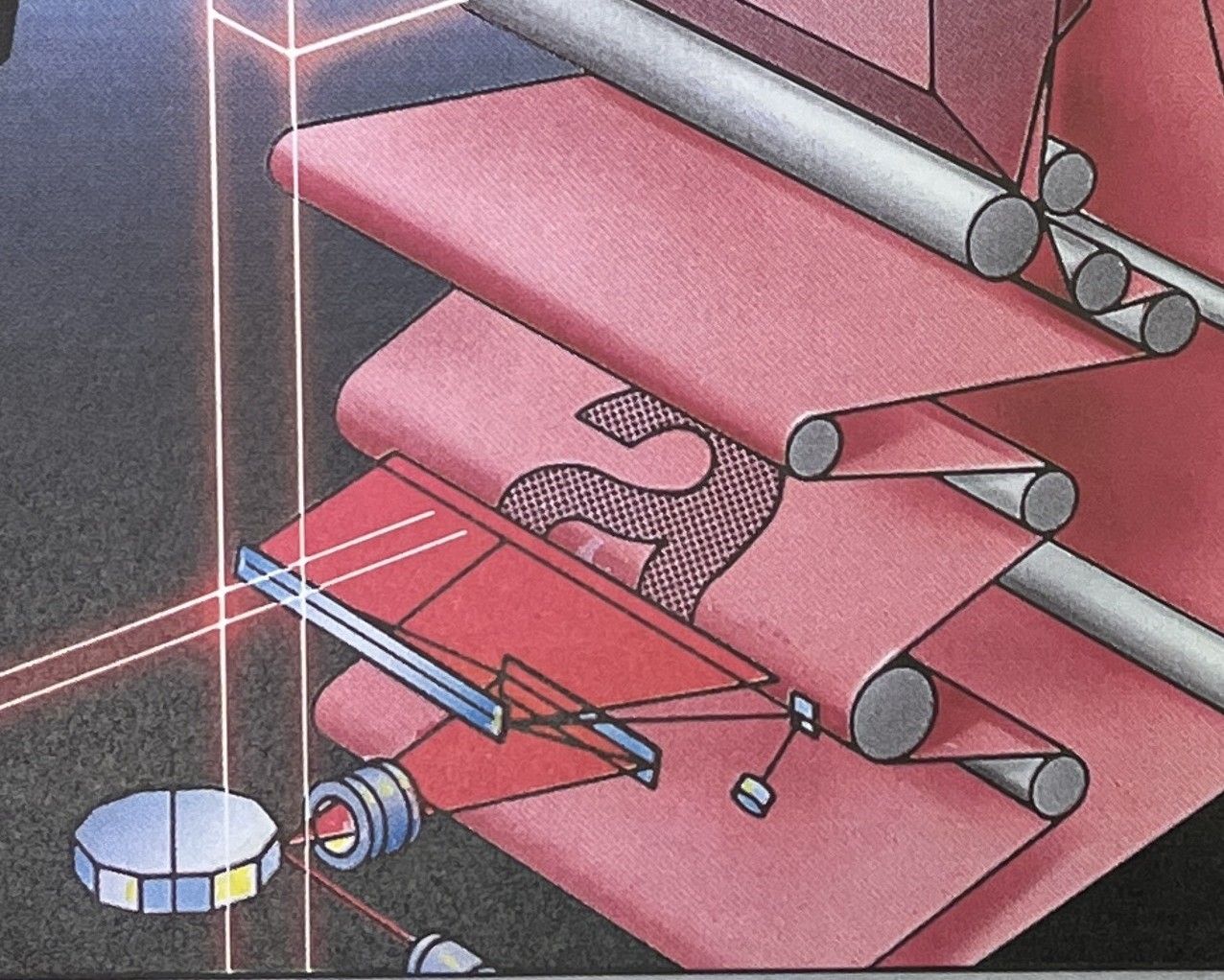
The Océ 6750 was introduced to the market in 1986. In the 6750, a light image was created by a modulated laser beam that was directed at high speed across the charged master. The laser beam was moved by a rotating mirror unit built by the Japanese company Topcon.
.
.
Office Automation
The laser printer played an important role in office automation,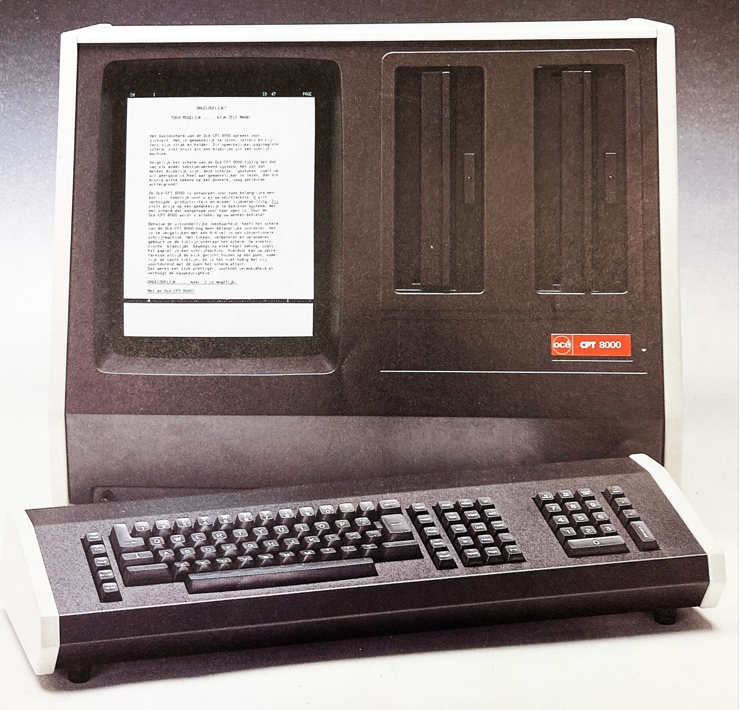 in which office workers’ typewriters were replaced by desktop computers and later by personal computers (PCs, introduced by IBM). Around 1980, Océ also began selling such office systems, initially with workstations, automatic typewriters, and line printers from the American company CPT under the name Océ 8000 system.
.
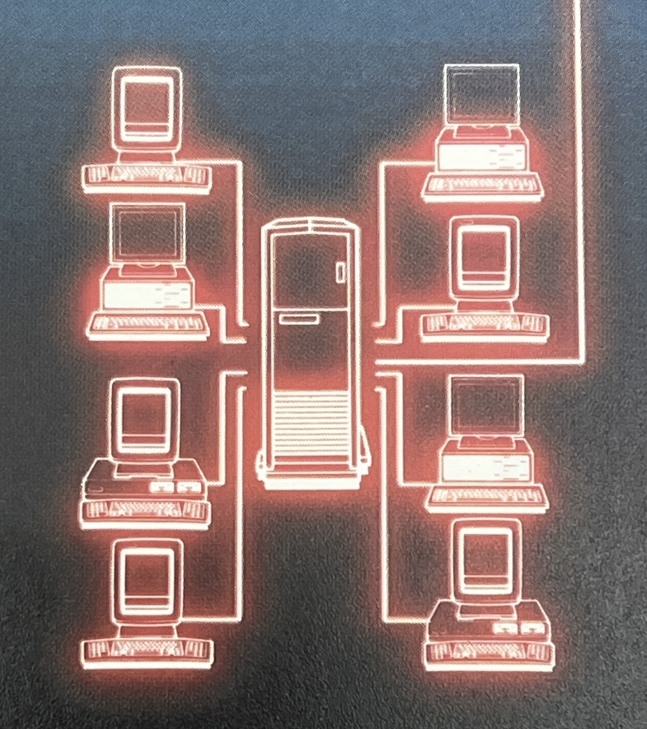
Later (in 1988), Océ developed its own 6000 Office Automation System, which connected various workstations. CPT workstations were replaced by PCs running software packages such as WordPerfect. The Océ 6750 consistently served as the main output device, alongside desktop printers.
Meanwhile, a digital network system was developed elsewhere that could connect all workstations and printers—the Local Area Network (LAN). This rapidly took over the entire office landscape. For a description of digital networking techniques and their application, please, refer to the chapter “Digital Systems.”
.
The Océ 6750 remained in production until 1995, 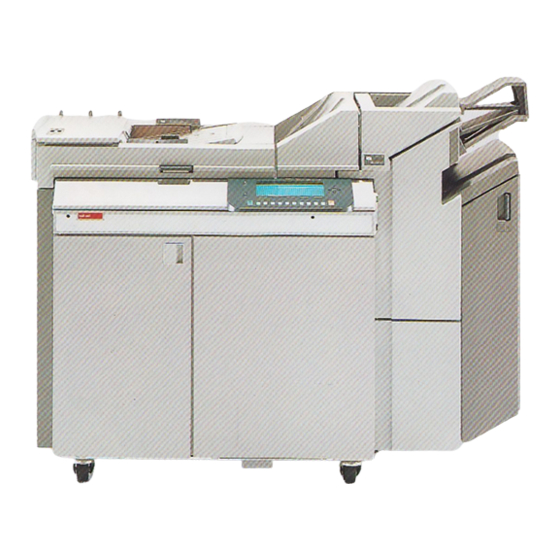 when its role was taken over by the Océ Varioprint 3165, a digital version of the Océ 3045 series copiers. The Océ 3165 featured a scanning unit and was initially developed as a digital copier. During its development it was already equipped with a LAN connection and controller. In this machine, image exposure was carried out by an array of LEDs.
.
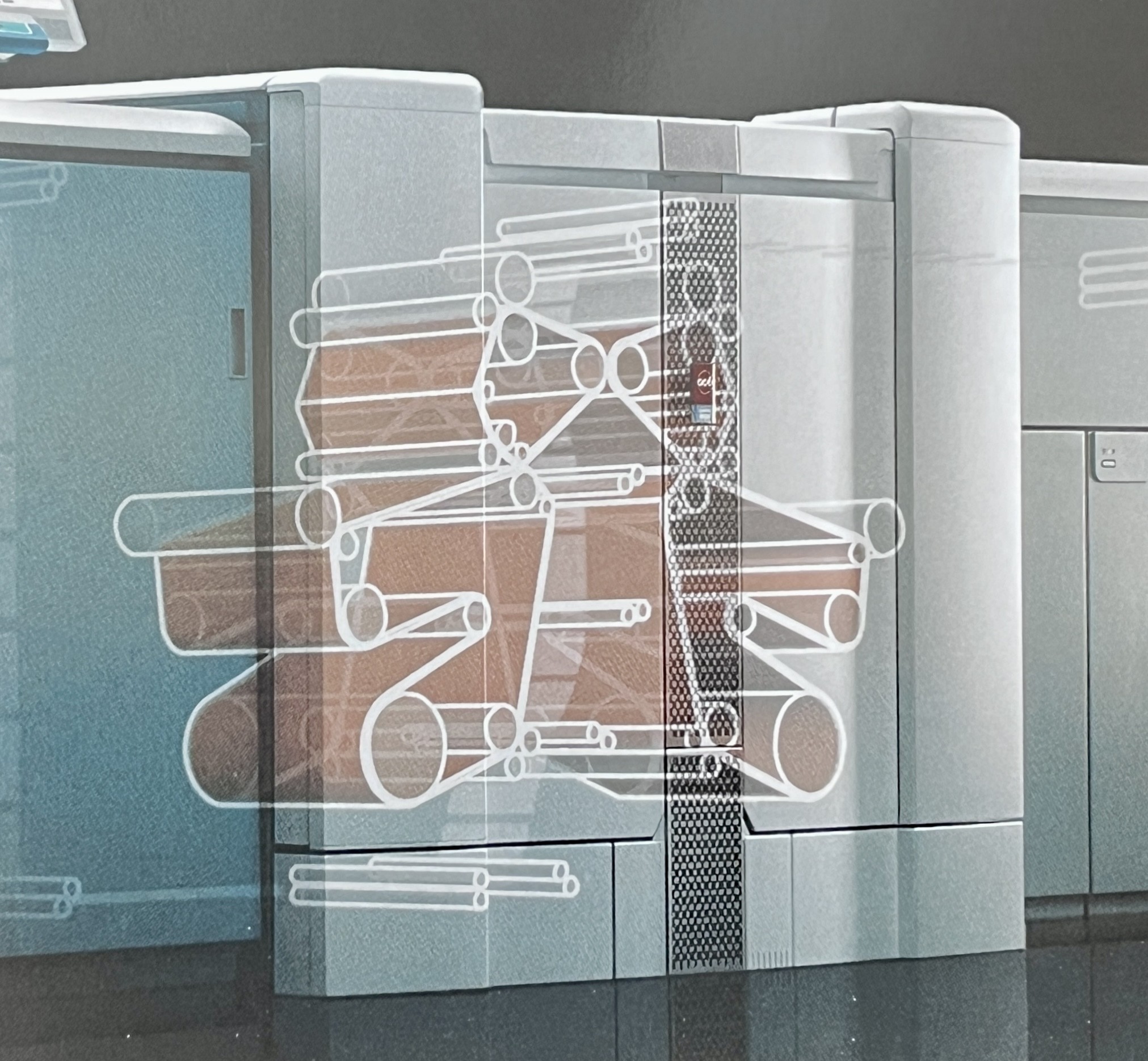
In Venlo, the print technology of the Océ 3165 was used for many successors. An increase in printing speed was achieved in 2007 with the Océ Varioprint 6000 Gemini, which printed both sides of a sheet simultaneously using two identical printing units.
.
.
Wide format and image processing
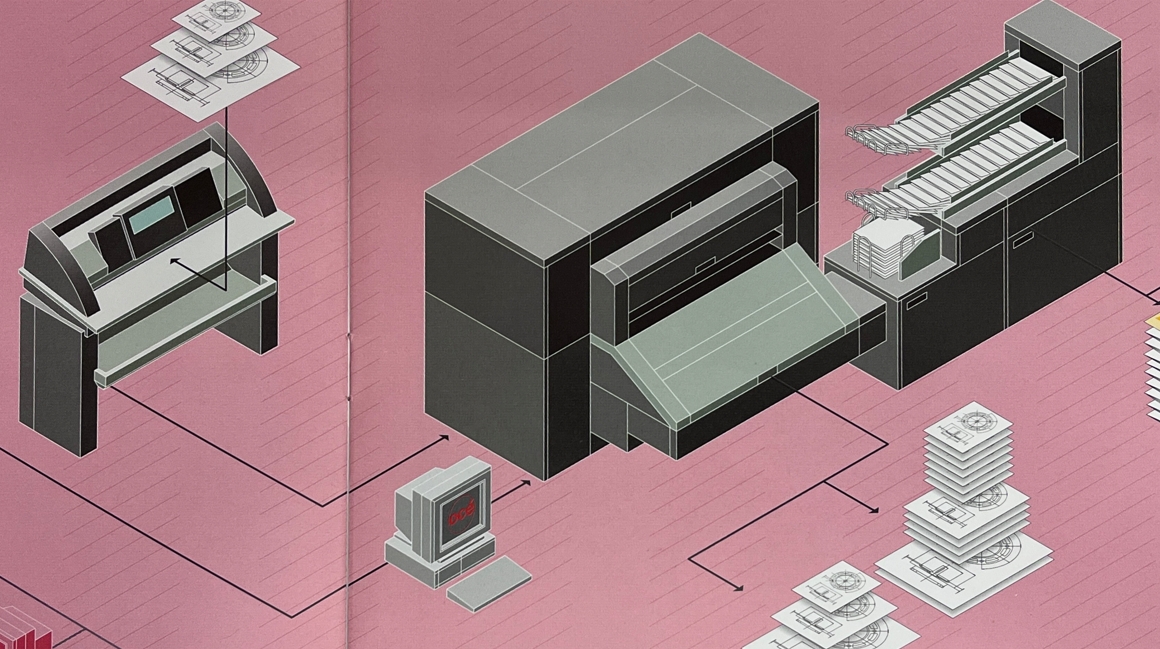 Océ also introduced digital copying machines to the wide format market, such as the Océ 9800 and the smaller Océ 9400, both launched in 1995.
Images from a scanner are relatively unsharp due to imperfections in the scanning optics and must therefore be extensively processed to make them suitable for printing. This processing includes digital filters and is complex due to the enormous data files involved—especially in wide format devices. The software for these processes was mainly developed within Océ in wide format projects and was later adopted and further refined in office projects.
High speed printers
 In 1996, Océ acquired the high speed printer division of Siemens Nixdorf. This company, located in Poing near Munich, built very large printers for extremely high volumes at very high speeds (from several hundred up to 1000 images per minute), an area in which Océ had not previously been active. Due to the high speed, these machines used roll paper or continuous forms. Image formation techniques were similar to those used by Océ, but the controller had a completely different design. These printers were intended for data from large computers and mainframes, bringing Océ back into the same environment as its first digital printer, the Océ 6750.
Colour printers
When Océ realized that the market increasingly demanded colour documents, development of a colour printer was started in Venlo.
This machine, the Océ CPS700, featured an unconventional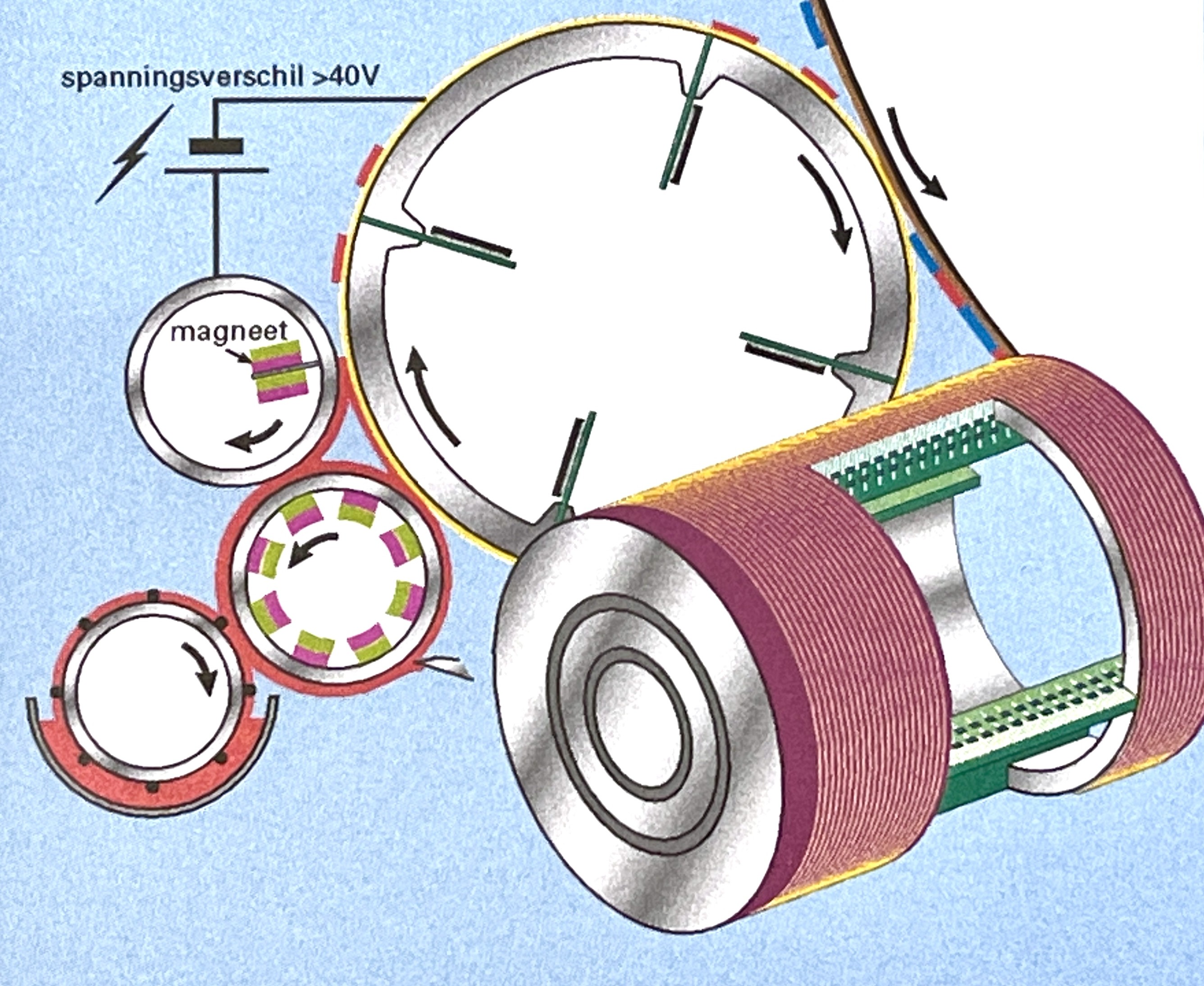 printing technique called “direct imaging.” In this process, magnetizable coloured toner particles were directly image-wise developed onto a drum using a magnetic roller. The drum was covered with electrode rings (16 per mm) that could be controlled individually. By applying a controllable voltage to the magnetic roller, a two-dimensional electrical control signal was created, allowing toner particles to transfer – or not – to the drum. Each colour had its own roller/drum system.
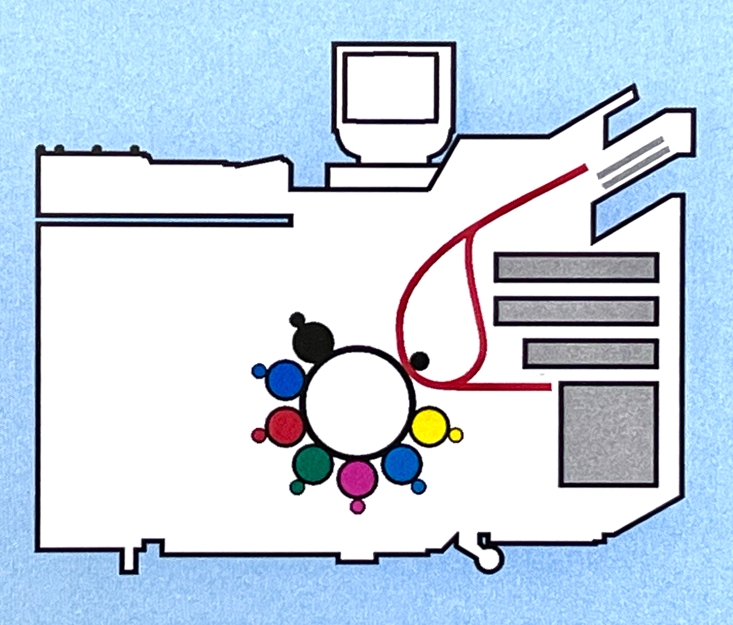 These systems were arranged around a rubberized, heated collecting drum and transferred their partial images onto it in synchronization. A full colour image was thus formed on the collecting drum, which was then transferred to a sheet of paper.
.
Magnetizable toner particles are not transparent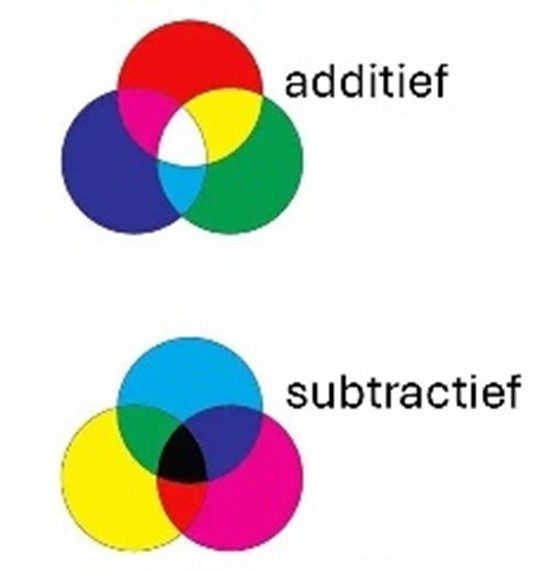 and therefore cannot form a subtractive colour blend as in traditional colour printing. Moreover, the direct imaging process could only produce single layer toner images. Different coloured toner particles had to be placed side by side, resulting in additive colour mixing. This required seven colours (including black). A special image processing method was developed and programmed into a dedicated controller.
The direct imaging colour system is very stable and not so sensitive to environmental conditions, but also highly complex.
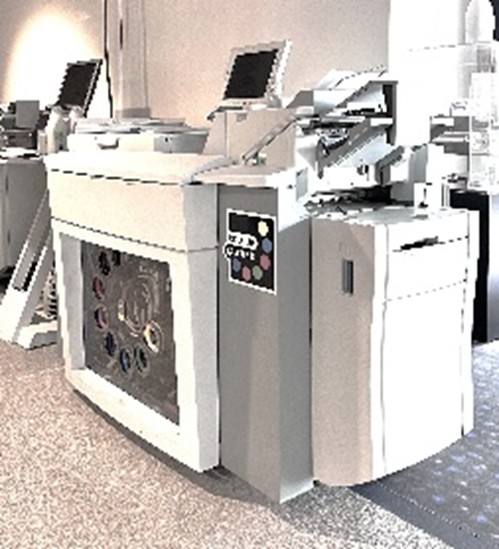 The first product was launched in 2001, but the technology ultimately proved too complex and expensive for a market that had already adopted four-colour printers. The CPS line was discontinued in 2013.
.
Meanwhile, from 2006 onward, Océ already offered 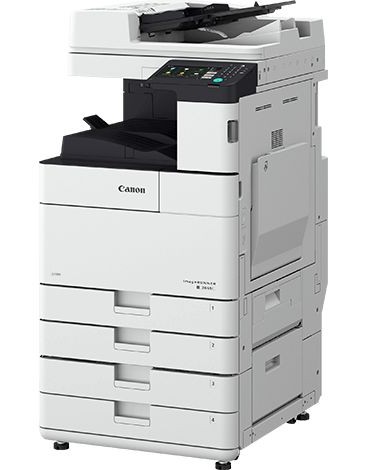 a colour printer/copier (Océ CS 600) combining Konica Minolta hardware with Océ’s advanced colour controller.
After Canon Inc. acquired Océ in 2009, Konica Minolta hardware was replaced by Canon Image Runner and Image Press printers.
.
Inkjet colour printers – wide format (from 2002)
Printing in colour in the wide format segment was more challenging with traditional techniques. Technical drawings could be produced using wide format plotters, such as pen plotters from Océ Graphics in Créteil (acquired in 1989).
However, plotters were unsuitable for filled colour areas. 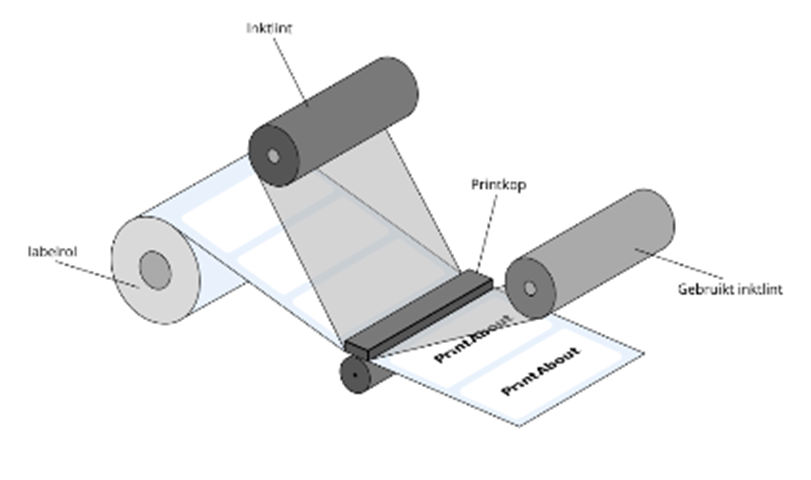 Initially, thermal transfer printers were used, wherein heating elements transferred ink from a donor sheet to a receiving sheet. This generated a lot of waste.
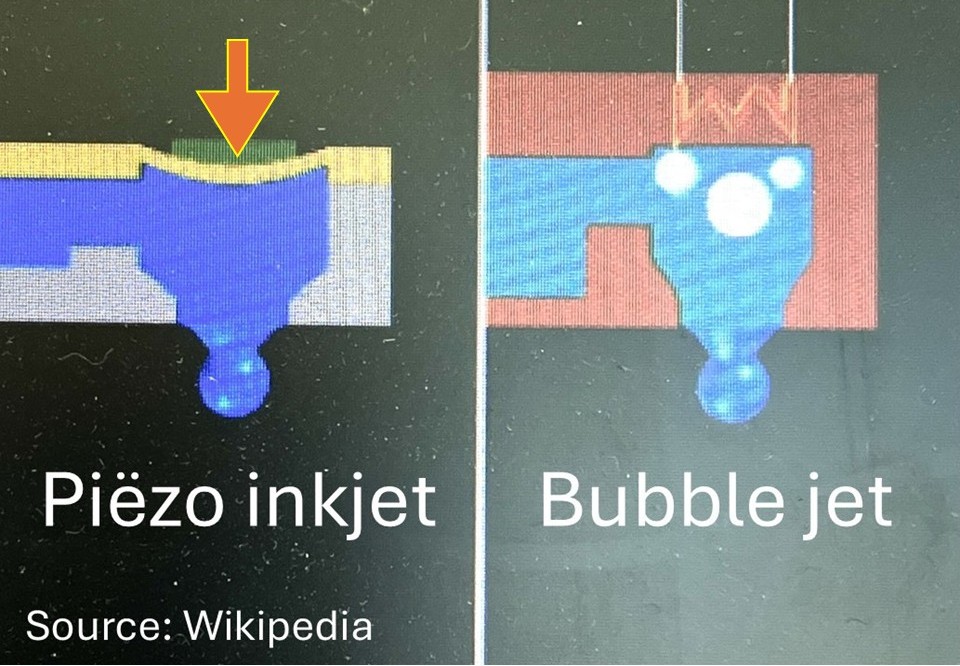 Full area colour printing only became truly viable with a new technology: inkjet.
Inkjet printers spray tiny droplets of ink onto a substrate in patterns defined by a computer. Various techniques exist, such as piezoelectric inkjet and bubble jet, and different types of ink are used, including water-based inks, wax-like inks, and inks that harden in UV light (UV-curable inks).
Although Océ began researching inkjet technology early, other suppliers were first to market with practical printers. Moreover, patent restrictions hindered Océ’s own development.
Starting in 2002, Océ entered the wide format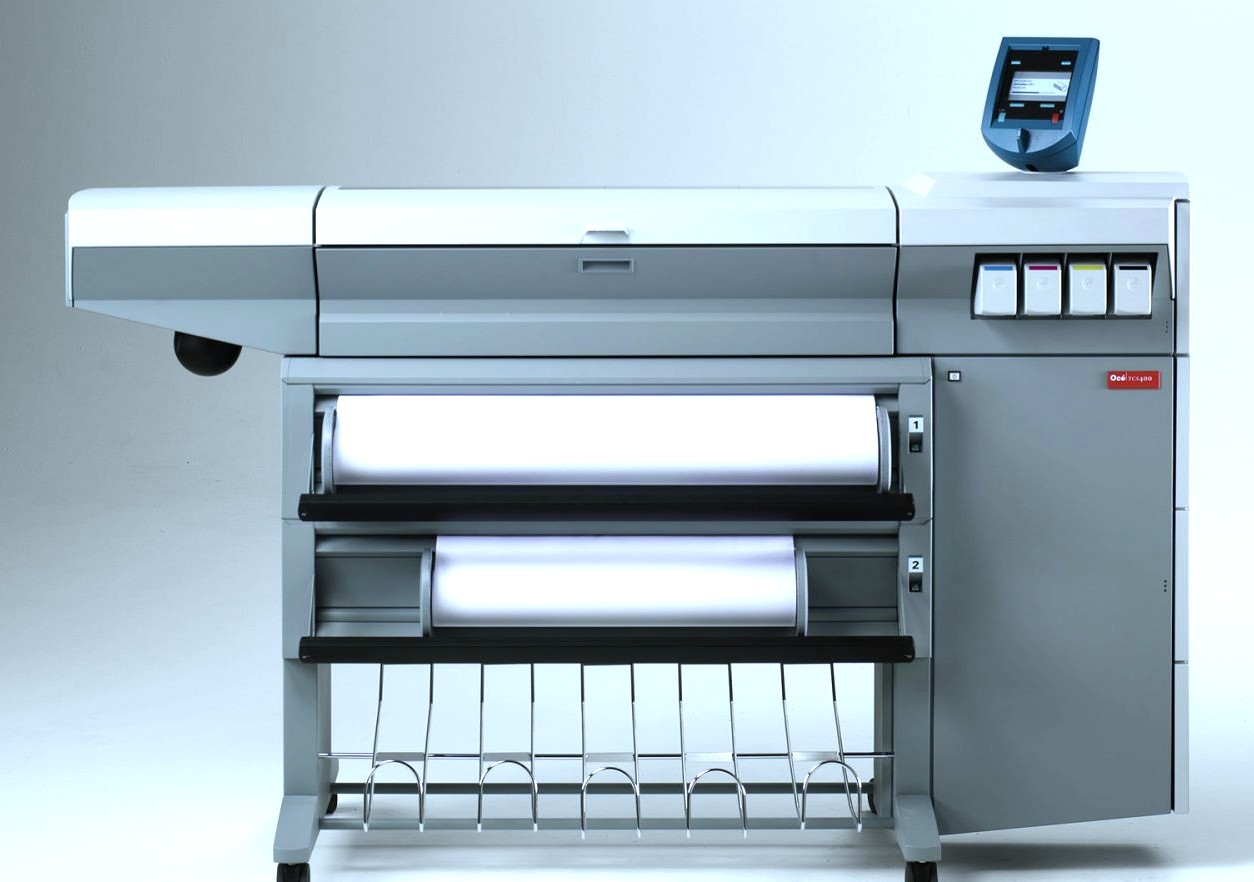 inkjet market with acquired products while continuing to develop its own technology. That same year also, the Océ TCS400 was introduced, designed by Océ and incorporating Lexmark printheads for water-based inks (bubble jet).
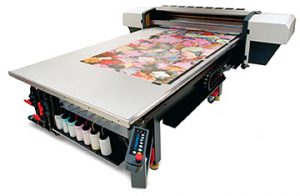 Océ’s first truly proprietary product also appeared in 2002, developed in Canada and using UV-curable ink.
A special application of this technology created a new market from 2014 onward.
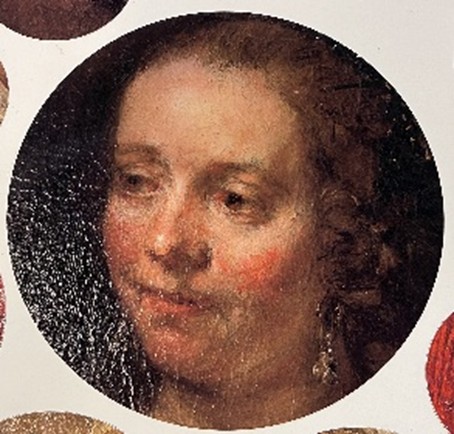
UV-curable ink hardens so quickly that multiple layers can be printed on top of each other to create relief prints, such as maps and reproductions of paintings with visible and tactile brush strokes.
.
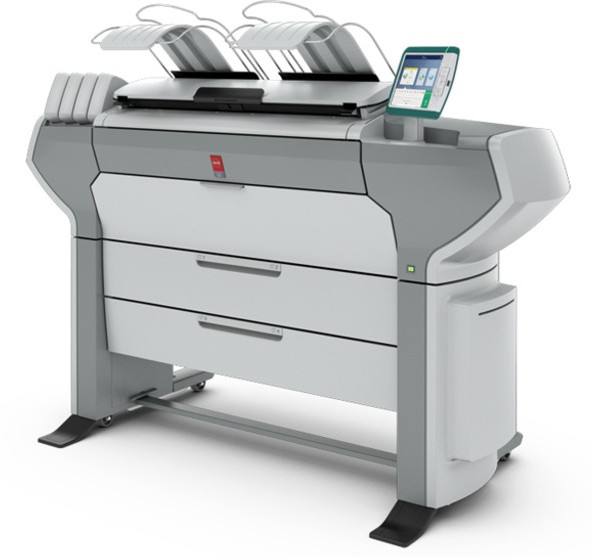 In 2008, the first wide format colour printer developed in Europe, the ColourWAVE series, was launched.
 It used Océ Crystal Point ink, which could be stored in solid form, adhered to almost any surface, and was suitable for durable outdoor prints. The ink was supplied as wax-like pellets that were melted inside the printhead before use.
.
.
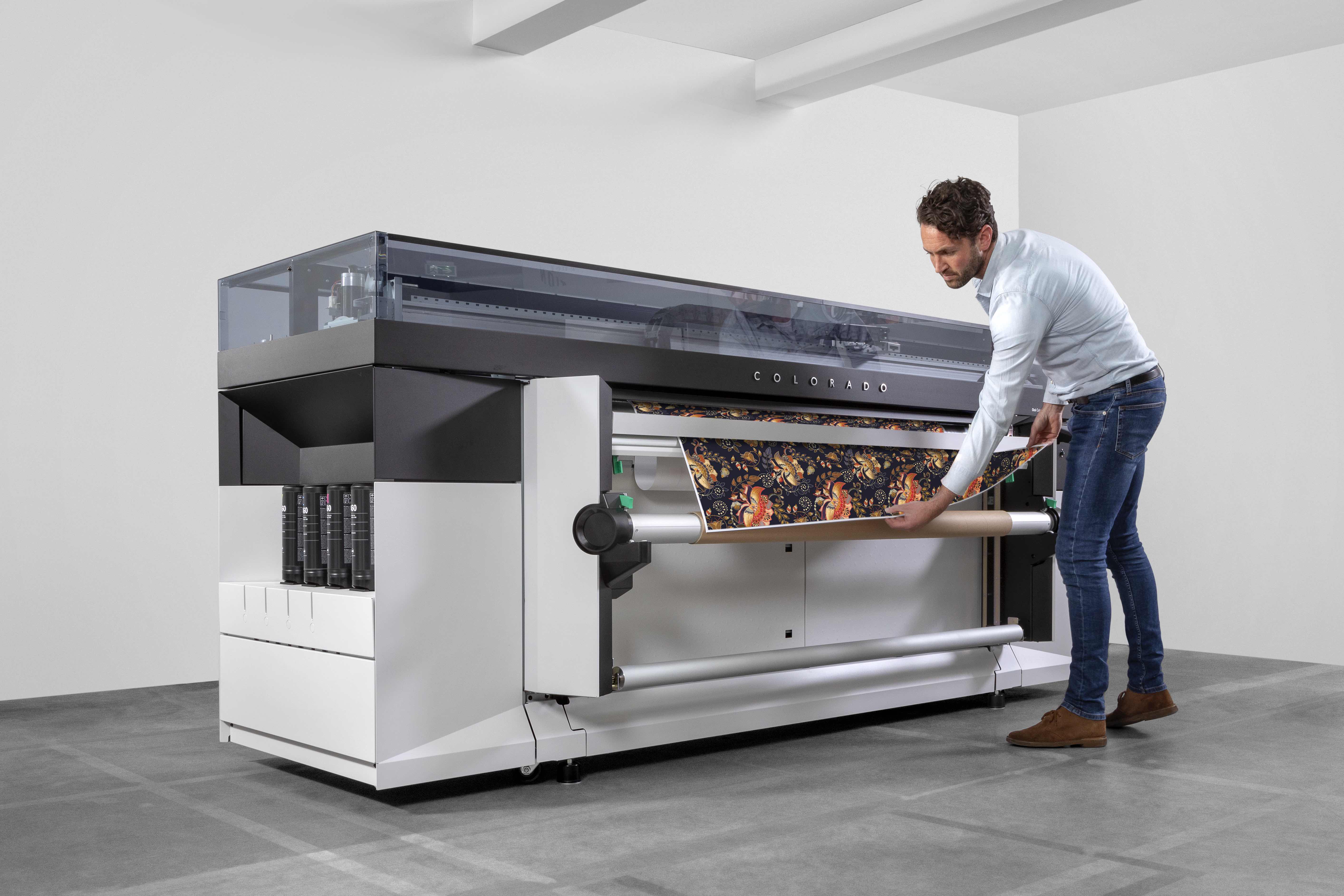 Further development in Océ’s laboratories led to the Océ Colorado printer in 2017, which uses a new UV-curable gel ink.
.
.
.
Inkjet in the office
In the office sector, the first inkjet news came from Océ’s high-speed printer division, where the ColorStream line was introduced to the world in 2010.
In 2015, the i300 series, developed at the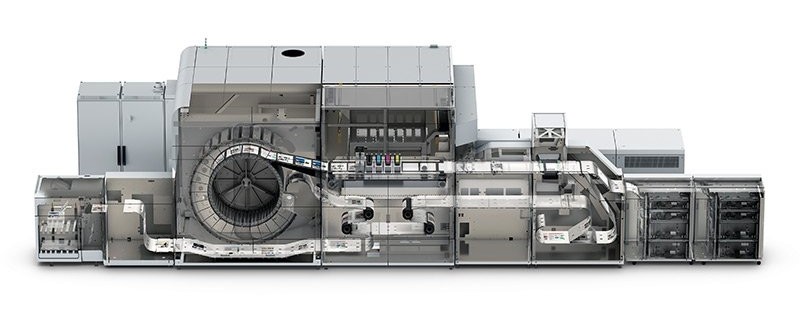 research center in the Netherlands, was launched commercially. This inkjet printer, featuring iQuarius technology based on water-based ink, processes single sheets of paper at high speed.
.